
 raktalio
Event Sourcing
Data, in its raw form, is simply a collection of facts and figures. The real value emerges when we analyze this data, uncovering patterns, insights, and opportunities that can revolutionize industries. Effective data analysis leads to informed decision-making, predictive insights, and ultimately, innovation. But how do we ensure that our data is not just a static snapshot but a dynamic, evolving story?
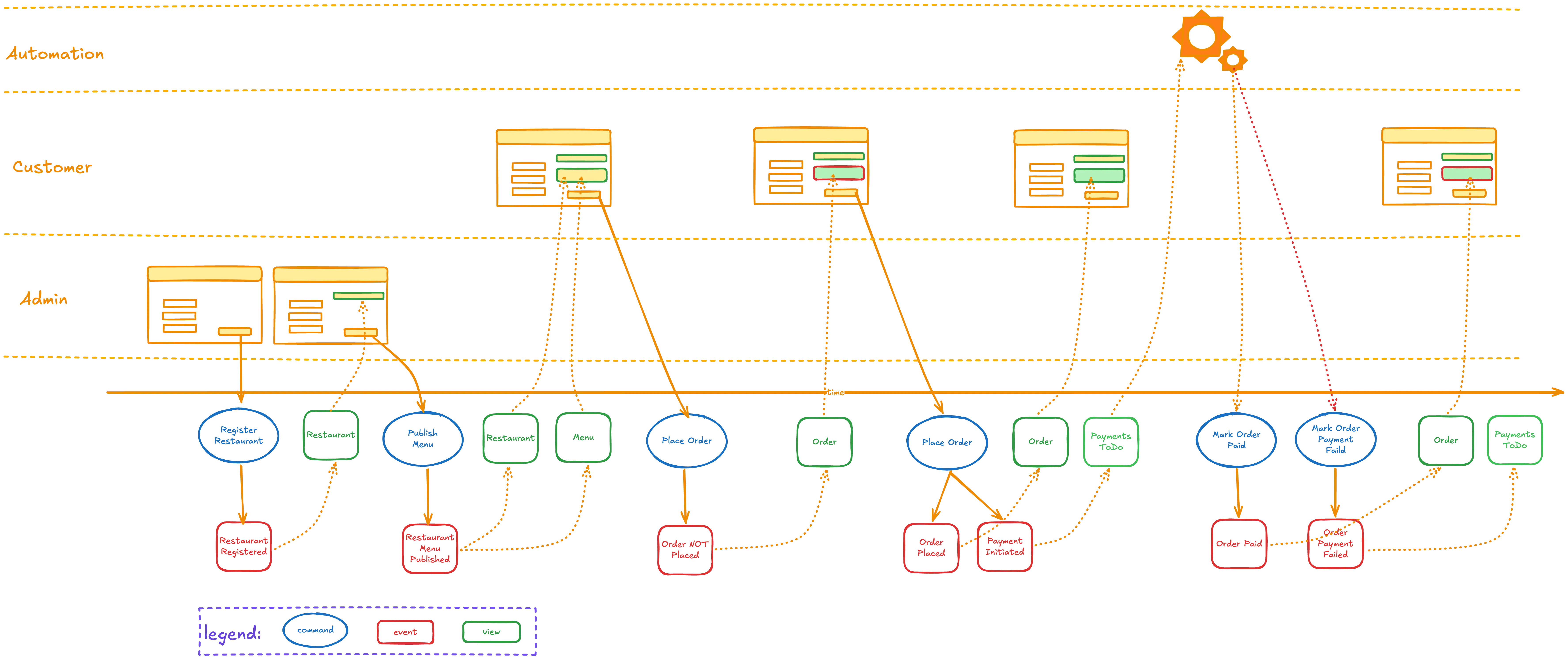
- A composable event ledger is the brain and spine of your business.
- Instead of storing only the current state of an `object`, event sourcing records every change as a series of events. It`s your single source of truth.
- By analyzing historical events, we can identify trends and patterns that inform strategic decisions.
- By understanding every interaction, we can personalize and improve customer experiences.
Destructuring
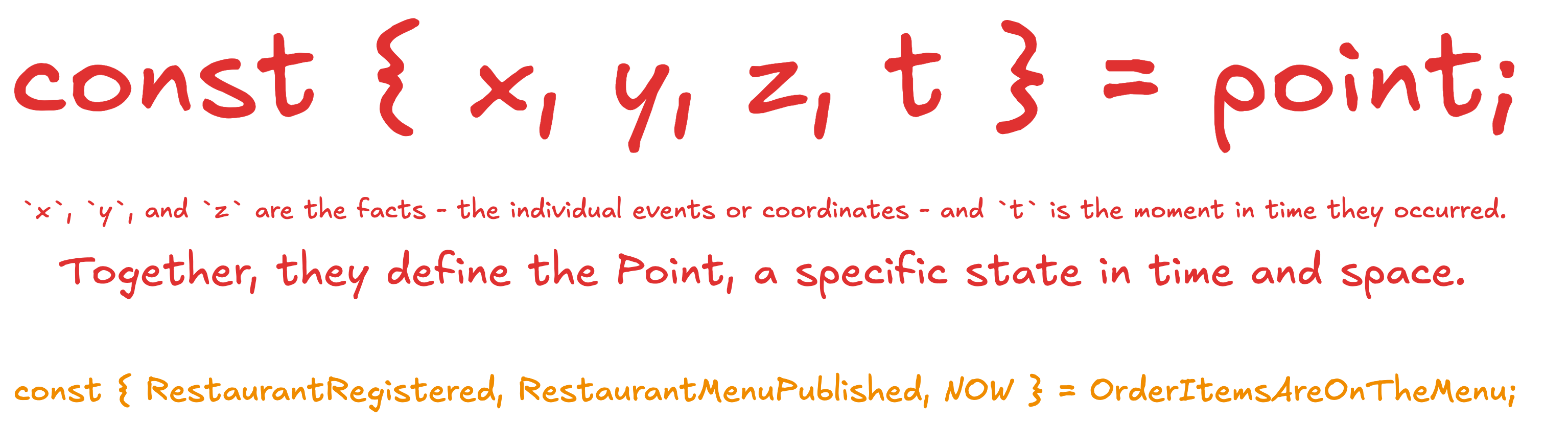
In event-sourced systems, we don`t model state as a central, pre-built structure, like a traditional aggregate/entity with all its fields eagerly loaded. Instead, we derive state on demand, pulling together only the minimum relevant facts required to make a specific decision.
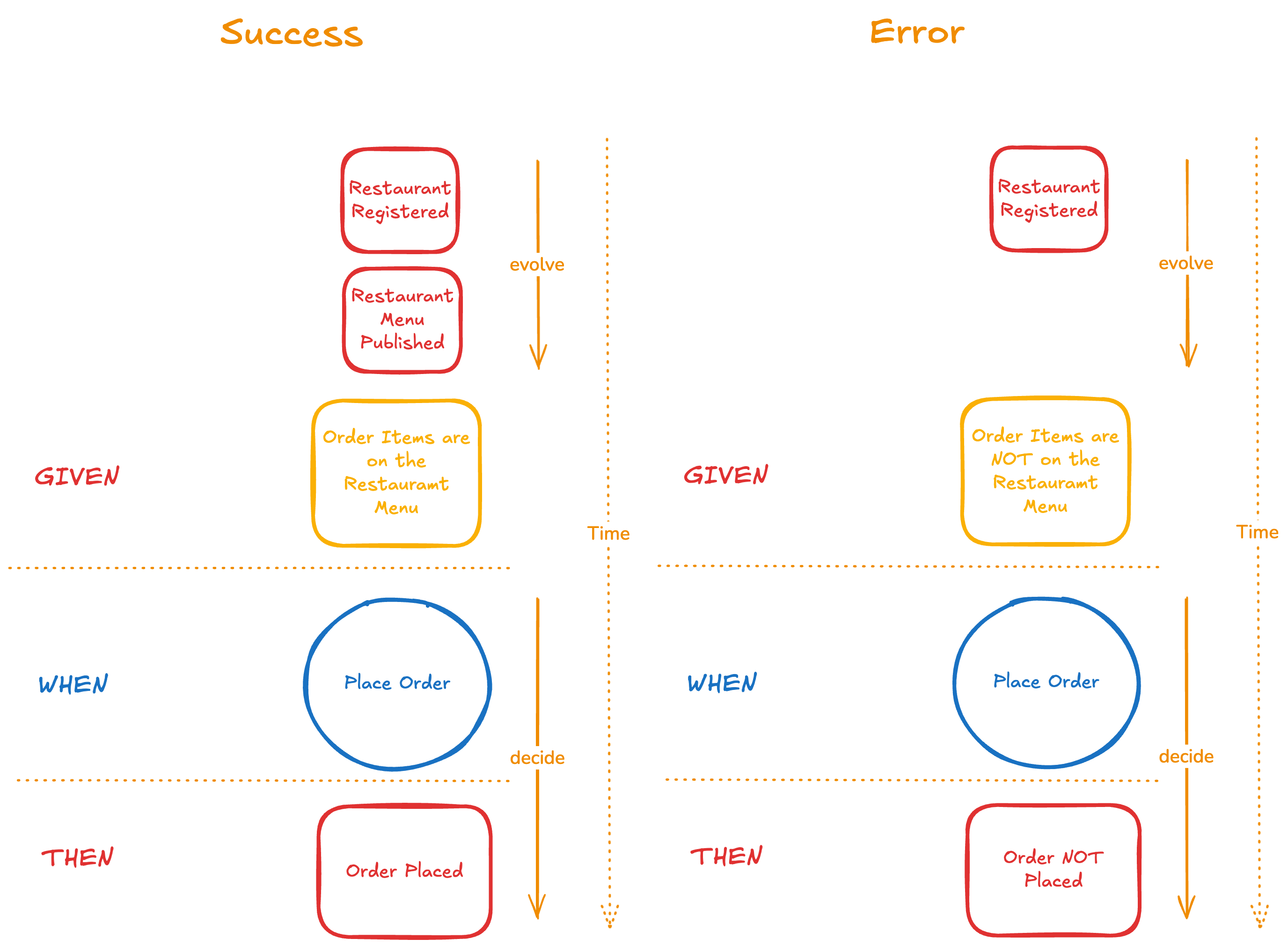
Those yellow sticky notes in the diagrams? They`re not “the state of the Order entity” or “the state of the Restaurant entity.” They represent just enough information to answer one question: “Can we process this command now?”
Each yellow sticky represents a small, focused composite of events, selectively extracted and pattern matched to form a locally sufficient truth.
Libraries (Kotlin | Rust | TypeScript)
Open-source libraries for functional domain modeling. Need help implementing these patterns in your organization? Explore our professional services
f{model} in Kotlin
Lightweight Kotlin library enabling functional and reactive domain modeling patterns
f(&model) in Rust
Lightweight Rust library enabling functional and safe domain modeling patterns
f(model) in TypeScript
Lightweight TypeScript library enabling functional and algebraic domain modeling patterns
f(&decider) in Rust
Dynamic consistency boundary. Decider pattern. Progressive type refinement.
f(decider) in TypeScript
Dynamic consistency boundary. Decider pattern. Progressive type refinement.